
Correlation Between Acupuncture Point Sensitivity and Gastric Ulcers in Horses
At Veterinary Acupuncture and Rehabilitation Services, Dr. Allie Turner is actively involved in ongoing clinical research exploring the relationship between Traditional Chinese Veterinary Medicine (TCVM) findings and Western diagnostic disease patterns.
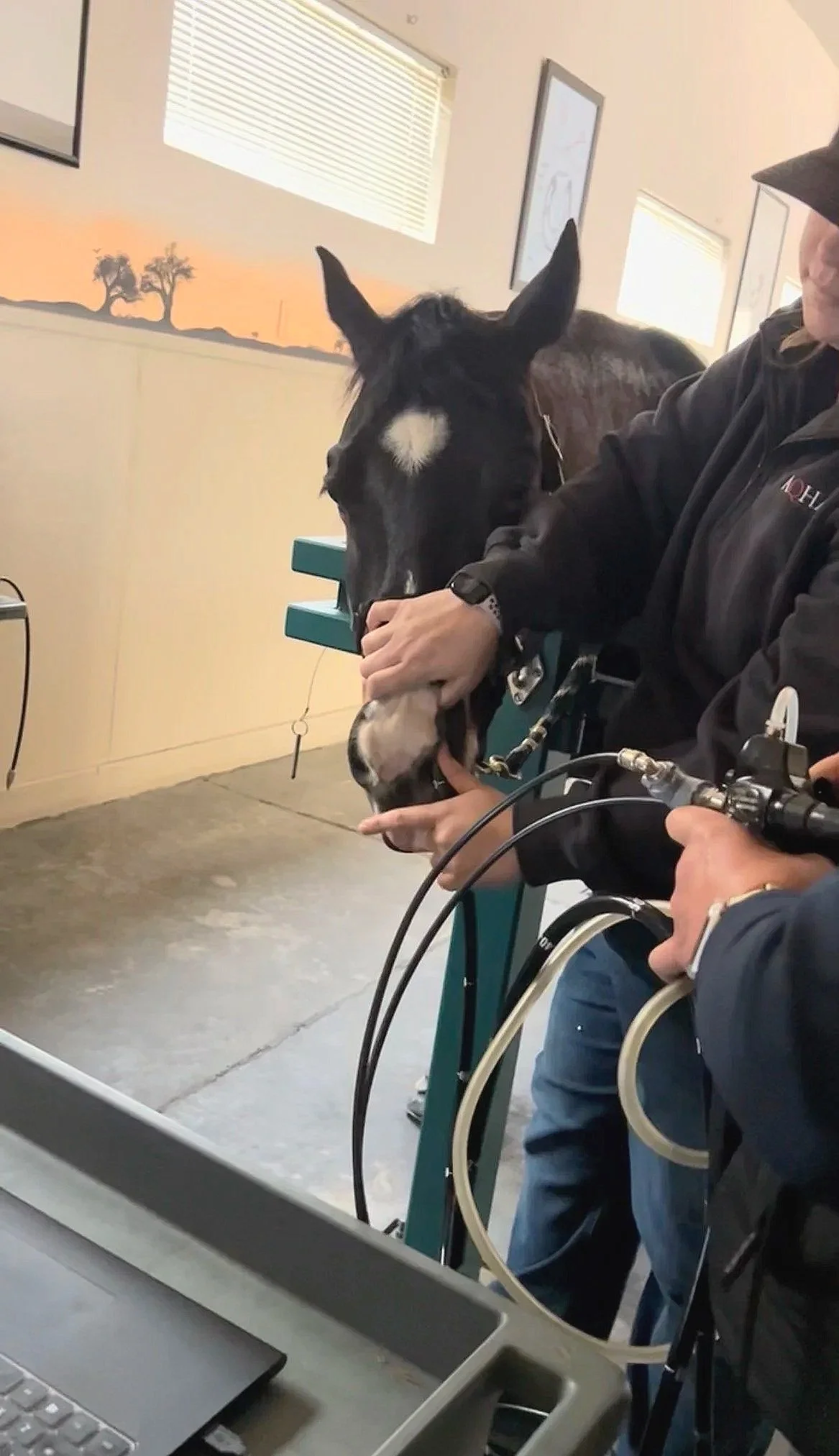
“Levi” undergoing gastroscopy at Steinbeck Equine Peninsula Hospital with Dr. Williams and veterinary technician Jenny Mize.
One area of focus is the correlation between equine acupuncture scan point sensitivity and gastric ulceration in horses.
This work is being conducted in collaboration with Dr. Jen Williams at Steinbeck Peninsula Equine Clinic, combining advanced gastroscopy diagnostics with TCVM-based assessment techniques.
Background: Gastric Ulcers in Horses
Gastric ulcers are a common and often under diagnosed condition in performance and leisure horses. They can present with a wide range of clinical signs, including:
Poor performance or reluctance to work
Behavioral changes or irritability
Weight loss or difficulty maintaining condition
Girth sensitivity
Recurrent colic-like signs
Decreased appetite or picky eating
Diagnosis is traditionally confirmed through gastroscopy, which allows direct visualization of the stomach lining.
The TCVM Perspective: Acupuncture Scan Findings
Within Traditional Chinese Veterinary Medicine, acupuncture points are evaluated not only for treatment but also as diagnostic indicators of internal imbalance.
In horses, specific acupuncture points may demonstrate increased sensitivity during a TCVM acupuncture scan, which can provide additional insight into underlying physiological stress or dysfunction.
This study is evaluating whether patterns of scan point sensitivity may correlate with the presence and severity of gastric ulceration confirmed via gastroscopy.
Study Goal
The goal of this research is to explore whether acupuncture scan findings may serve as a complementary diagnostic tool alongside Western medicine, particularly for:
Early identification of horses at risk for gastric ulcers
Understanding systemic patterns associated with ulceration
Integrating TCVM assessment into conventional equine practice
Improving prevention and treatment strategies
This is an ongoing area of investigation and is not intended to replace gastroscopy, but rather to evaluate how integrative diagnostics may enhance our understanding of equine gastric health.
Clinical Collaboration
Gastroscopy
This study is being conducted through collaboration between:
Dr. Allie Turner, DVM, CVA, CCRT, CVMMP- Veterinary Acupuncture and Rehabilitation Services
Dr. Jen Williams, DVM - Steinbeck Equine
Together, we are working to bridge Eastern and Western diagnostic approaches in Equine medicine.
Dr. Williams will be performing the gastroscopy with Steinbeck Equine following Dr. Turner’s acupuncture scan of the equine patient enrolled in the study.
Why This Matters
Gastric ulcers are often multifactorial and can be challenging to fully assess using a single diagnostic approach. By integrating TCVM scan findings with gastroscopy results, we aim to better understand patterns of disease and improve early recognition and supportive care strategies for horses at risk.
Participate in the Study
If you are interested in having your horse evaluated as part of this research study, you may apply below.
Study Title:
“Correlation Between Acupuncture Point Sensitivity and Gastric Ulcers in Horses”
—> Click Here to Apply to Participate in the Study
Disclaimer
This study is ongoing and exploratory in nature. Acupuncture scan findings are used as part of a comprehensive veterinary evaluation and are not a standalone diagnostic tool for gastric ulcers.